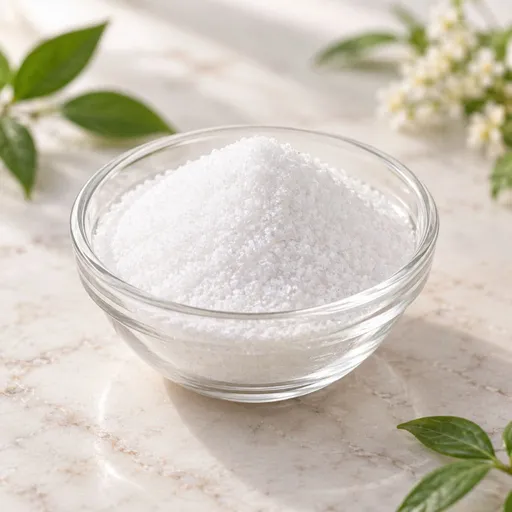
D-mannose: what it is and how to read it on a label
A simple sugar that mostly passes into the urine. What it is, what studies have looked at and how to read the milligrams on a label.
Cranberry has a large Cochrane review behind it, and D-mannose has a handful of trials and one meta-analysis, with results that point in different directions. This article lays out what each source reports, what the guidelines address and how to think about it when you talk to your GP or pharmacist. It does not issue a verdict.
A randomised controlled trial (RCT) compares a group taking the supplement with a group that is not. A systematic review gathers all the trials on a question; a meta-analysis pools their numbers. A review is only as informative as the trials inside it, so size and design matter.

Studies on urinary infections often use different measures: recurrences, antibiotic courses, visits to a GP. Two studies can both be careful and still not be directly comparable.
Keep that in mind in the sections below, because the same product can look different depending on what was counted.
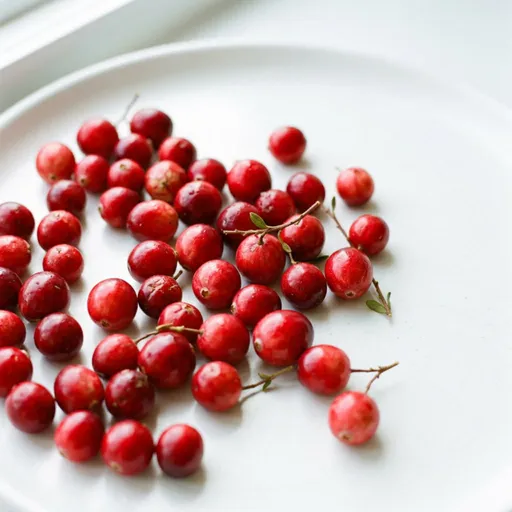
The Cochrane review included 50 studies and 8,857 participants. In moderate-certainty evidence, cranberry products reduced the risk of symptomatic, culture-confirmed UTIs in women with recurrent infections (risk ratio 0.74; 95% CI 0.55 to 0.99; 8 studies, 1,555 participants), in children (RR 0.46) and in people prone to infection after medical interventions (RR 0.47).
For older people in institutions, pregnant women and people with incomplete bladder emptying, the benefit was small or absent, with low certainty. The review found no clear difference between juice and tablets, or between low, medium and high PAC doses. Side effects affecting the stomach were similar to placebo. The detail is in our cranberry guide.
The results do not coincide, and research continues. Neither direction settles the question on its own. For what D-mannose is and how to read its dose, see the D-mannose guide.
The EAU guideline on urological infections and NICE NG112 both address how recurrent UTIs are assessed and prevented. Supplements are a subject to raise with your GP or pharmacist, who can set them against your history and any medicines you take. Both documents are updated from time to time, so read the current text rather than relying on a summary.
Another limit is the product itself. A trial tests one preparation at one dose, and the capsule on your shelf may differ in both. The studies give a map of the question; they are not a label for any specific bottle.
Fever, pain in the back or side, blood in the urine, pregnancy, symptoms that last more than two or three days or keep coming back all need medical advice. A supplement does not replace treatment.
Both ingredients appear in the formula of Cystobact, alongside strawberry-tree leaf and citrus bioflavonoids; the ingredients page explains each part.

Cystobact · £49
D-mannose and cranberry extract 4:1 in one bottle of 30 capsules.
Order and delivery: United Kingdom only. The seller ships to UK addresses.
They report different results. The Cochrane review supports cranberry in some groups, while the D-mannose trials do not all agree.
Yes, particularly if you have recurrent episodes, take medicines, are pregnant or have kidney problems.
Not always. D-mannose trials used about 2 g a day; many capsules contain a few hundred milligrams, so check the sums.
A simple sugar that mostly passes into the urine. What it is, what studies have looked at and how to read the milligrams on a label.
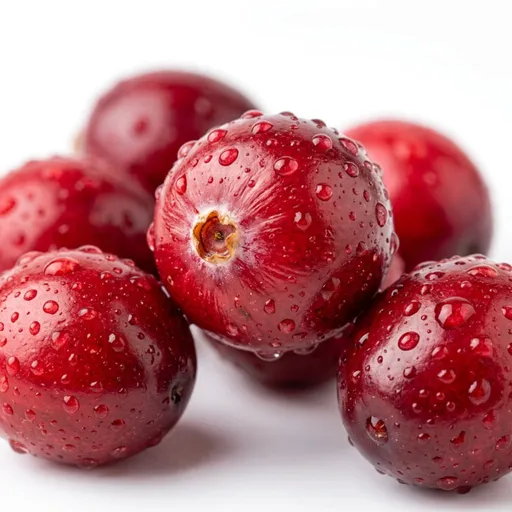
Proanthocyanidins, the 2023 Cochrane review and what “extract 4:1” or “36 mg PAC” means on a label.
Cystobact combines D-mannose, cranberry, strawberry-tree leaf and citrus bioflavonoids in easy daily capsules.
Order Cystobact£49Independent affiliate information site. We are not the manufacturer or the seller and may earn a commission on orders placed through our links. Your order is processed and shipped by the seller.