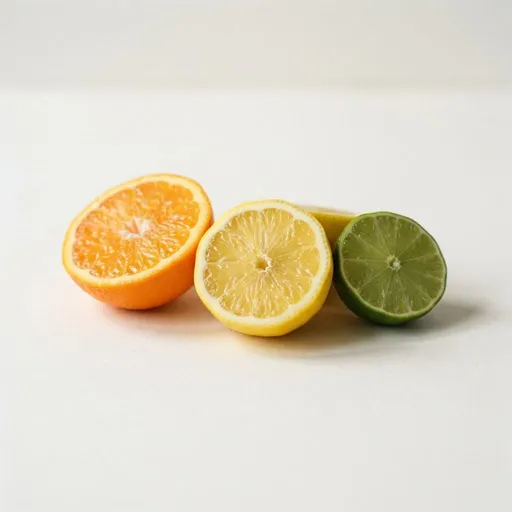
Citrus bioflavonoids: the supporting ingredient
Hesperidin, naringin and friends: what citrus bioflavonoids are and how to read “60%” on a label.
Arbutin is a plant compound found in the leaves of bearberry (uva-ursi) and of the strawberry tree, Arbutus unedo. In the body it is converted to hydroquinone and passes into the urine. European herbal regulators describe bearberry leaf for traditional use in mild urinary symptoms. Here are the plants, the label terms and the cautions.
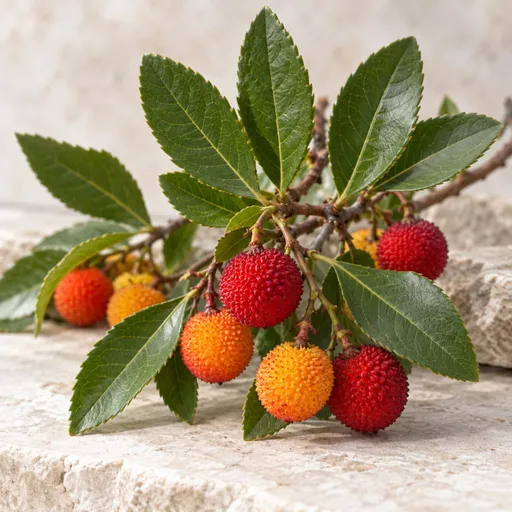
Both plants belong to the heather family (Ericaceae), and both leaves contain arbutin. Beyond that they are different species.

Leaf preparations have traditionally been taken as infusions. In supplements the leaf is more often concentrated into a dry extract, sometimes standardised to a stated percentage of arbutin.
Because the two plants are not interchangeable, the Latin name on the label matters more than the common name.
The European Medicines Agency’s committee on herbal medicines (HMPC) has a monograph for bearberry leaf. It describes traditional use, over at least 30 years, for symptoms of mild recurrent lower urinary tract infections such as burning and frequent urges to pass urine.
The monograph rests on long-standing traditional use and on laboratory data about arbutin’s activity against bacteria. It concerns herbal medicinal products. A food supplement is a different category, so follow the label and ask a pharmacist.
Arbutin is a glycoside of hydroquinone. After it is absorbed, the body converts it to hydroquinone compounds, which are excreted with the urine. Laboratory studies describe activity of arbutin against bacteria, which is the reason leaf extracts are included in formulas for the urinary tract. As with other plant ingredients, the amount you actually take depends on the extract, so the label detail below matters.
| On the label | What it tells you |
|---|---|
| Leaf (folium) | The plant part. Fruit or bark would be a different ingredient. |
| Latin name | Arbutus unedo and Arctostaphylos uva-ursi are different plants. |
| Dry extract, ratio (e.g. 4:1) | How concentrated the extract is compared with the raw leaf. |
| Standardised to X% arbutin | The share of arbutin in the extract. Check mg of arbutin per serving too. |
| Course length | Some products say how many days to take them. Follow it. |
One harmless oddity: hydroquinone derivatives can give urine a greenish-brown tint. It is a known effect, but a colour change you cannot explain is still worth mentioning to a pharmacist.
A practical way to use the table: pick up the pack, find the Latin name first, then the standardisation, then the milligrams. If one of the three is missing, that is a good question to put to the seller or to your pharmacist before you start.
You are pregnant or breastfeeding, under 18, have kidney disease, or take regular medicines. See a doctor for fever, pain in the back or side, blood in the urine, or symptoms that last beyond four days.
| Product | How the composition lists it |
|---|---|
| Cystobact | Strawberry-tree leaf extract 4:1 (Arbutus unedo), standardised to 5% arbutin; one of four active ingredients. |
It sits beside D-mannose, cranberry and citrus bioflavonoids; read about them in the cranberry guide and the D-mannose guide. The whole formula is on the ingredients page. For everyday habits, see how to prevent cystitis, and for reading numbers on packs, the label checklist.
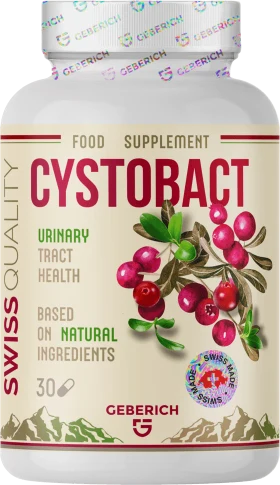
Cystobact · £49
Strawberry-tree leaf (5% arbutin) with D-mannose and cranberry in 30 capsules.
Order and delivery: United Kingdom only. The seller ships to UK addresses.
No. Both contain arbutin, but they are different plants from different regions.
Hydroquinone derivatives from arbutin can tint urine. If the change worries you, or comes with other symptoms, ask a pharmacist or doctor.
Herbal guidance for bearberry leaf limits use to one week. For a food supplement, follow the label and ask your pharmacist about duration.
The HMPC monograph covers adult women only, and herbal guidance does not recommend bearberry leaf under 18. Ask a pharmacist about any supplement for someone in these groups.
Hesperidin, naringin and friends: what citrus bioflavonoids are and how to read “60%” on a label.
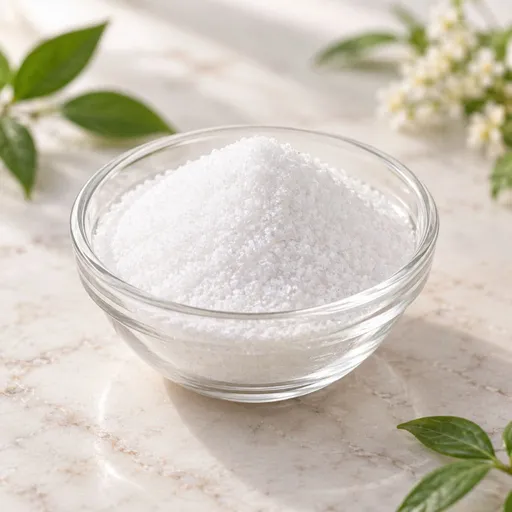
A simple sugar that mostly passes into the urine. What it is, what studies have looked at and how to read the milligrams on a label.
Cystobact combines D-mannose, cranberry, strawberry-tree leaf and citrus bioflavonoids in easy daily capsules.
Order Cystobact£49Independent affiliate information site. We are not the manufacturer or the seller and may earn a commission on orders placed through our links. Your order is processed and shipped by the seller.